
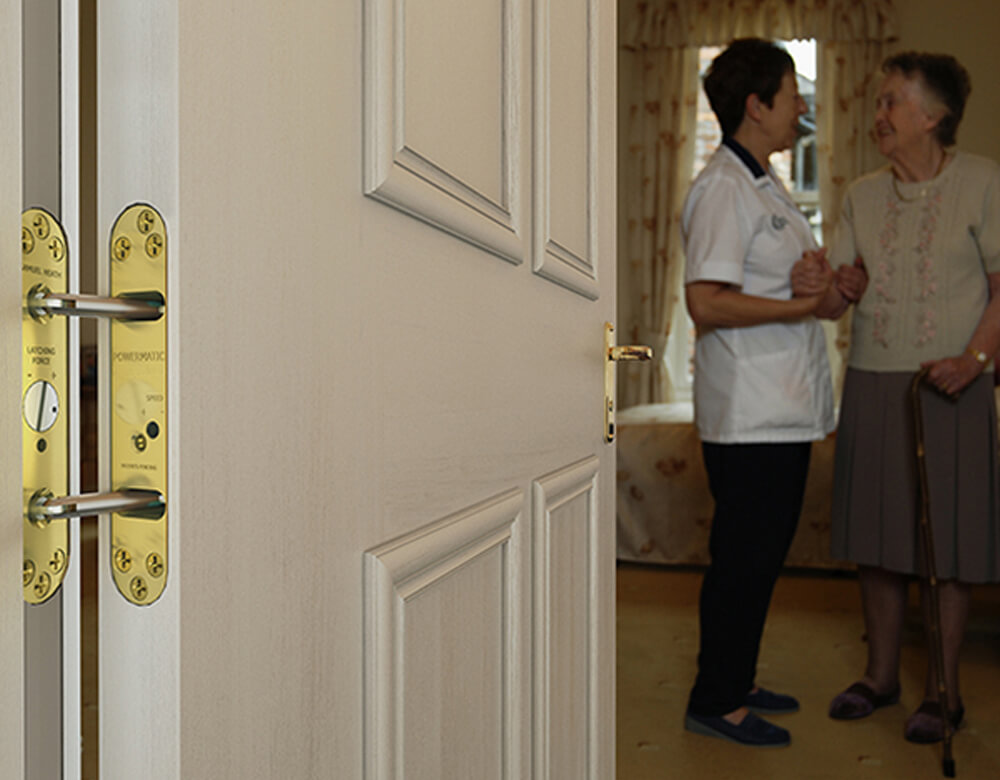
Hidden fire door closers
Hidden fire door closers
Hidden fire door closers offer an innovative alternative to traditional surface mounted, overhead fire door closers.

Hidden fire door closers
Samuel Heath is a leading name in hidden fire door closer technology. Hidden fire door closers ensure doors close automatically, or when activated by a fire alarm. They are concealed within the door frame (jamb) and the hinge panel of the door.
Benefits of using hidden fire door closers for your project
Architects, property developers, refit companies and facilities managers are increasingly choosing hidden fire door closers over traditional surface mounted door closers. This is because of the range of benefits hidden fire door closers offer for construction and refit projects.
- Control over vandalism and damage – overhead fire door closers are often subjected to vandalism or can be accidentally damaged. Once damaged, the entire door often has to be replaced.
Hidden fire door closers are concealed, so are very rarely subjected to malicious or accidental damage.
- Anti-ligature – overhead fire door closers offer a convenient ligature point, which raises substantial concerns in mental health institutions and other spaces used by vulnerable people. Hidden fire door closers do not present this problem.
- Enhanced aesthetics – hidden fire door closers don’t carry the institutional connotations associated with overhead fire door closers. This results in more comfortable and relaxed environments.
- Improved health and hygiene – hidden fire door closers don’t provide horizontal surfaces onto which bacteria and detritus can collect, making them more hygienic. They are also located at a height that makes them easy to inspect and clean.
Are hidden door closers compliant with UK fire regulations?
Yes, hidden door closers are compliant with UK fire regulations when they conform to all relevant fire performance standards. They must be CE marked (Conformité Européenne – goods sold in the European Economic Area) and UKCA (UK Conformity Assessed) marked, and comply with BS EN 1154 and BS EN 1634-1 fire safety standards.
Approved Document B of the UK’s building regulations states that fire doors must self-close. Hidden fire door closers are designed to meet all relevant fire safety criteria within Approved Document B.

Important factors when specifying concealed fire door closers
Here are some important factors when specifying concealed fire door closers.
- Does the concealed fire door closer meet fire safety standards, substantiated through independent certification?
- BS EN 1154 (500,000 opening and closing cycles without loss of performance or significant wear, and other criteria)
- BS EN 1634-1 (fire testing for one-hour and half-hour latched and unlatched fire doors)
- EN 1634 (Europe-wide standard for fire resistance testing)
- Certifire certification (independent, industry recognised third party fire safety certification)
- Does the concealed fire door closer meet manufacturing processes and systems standard BS EN ISO 9001?
- Does the concealed fire door closer create the required aesthetics, particularly in healthcare settings?
More information on choosing a concealed fire door closer can be found here.
Types of concealed door closers – Powermatic R100 and Powermatic R108
The Powermatic R100 is Samuel Heath’s leading hidden fire door closer. It is the only jamb-mounted hidden fire door closer with Certifire certification. This independent, third party passive fire product certification scheme gives specifiers peace of mind regarding the fire safety performance of the Powermatic R100. A full brochure containing its fire safety specification can be downloaded here.
For a hidden fire door closer that can be used with concealed hinges, the Powermatic Axis R108 was specifically designed to work with the Tectus concealed hinge system from Simonswerk. A brochure can be downloaded here.
Key considerations when specifying hidden fire door closers
Key considerations when specifying hidden fire door closers are:
Performance
The hidden fire door closer must be compliant with all relevant fire safety legislation. Any accreditations should be substantiated by the manufacturer, and all performance statements must be evidenced by documentation from independent test laboratories.
Where the hidden fire door closer is being used
Consideration must be given to the environment and situation in which the hidden fire door closer is to be used, alongside the needs of the building’s occupants.
Door weight, size and use
The hidden fire door closer must be compatible with the door weight, size and frequency of use.

Samuel Heath – keeping buildings and people safe
Samuel Heath is committed to keeping buildings and people safe through the design, manufacture and supply of high performance hidden fire door closers for customers across the world.
To discuss hidden fire door closers for your next project, please get in touch.